Four Filed Plans Side by Side
No single source lines up how different supplemental hospital plans are built, so we pulled the terms from each carrier’s own brochure, outline of coverage or employer benefits page. These are four real products sold four different ways.
| Plan and carrier |
How it is sold |
Benefit design |
Ages and underwriting |
Waiting periods and limits |
| Aflac Choice HSA-Compatible Hospital Confinement Indemnity (Option H) |
Individual policy through an Aflac agent |
Admission benefit picked at application, plus a daily benefit for up to 365 days and an ICU daily benefit |
Issue ages not shown in the outline we checked; guaranteed renewable for life |
30-day wait on sickness for people added later; 12-month pre-existing limit; births in the first 10 months not covered |
| LifeSecure Hospital Indemnity (HI 4.0) |
Individual policy, sold through agents |
Daily benefit from $100 to $900, paid for 3, 6, 10 or 21 days; optional lump sum admission and rehab riders |
Ages 18 to 85; simplified health questions, none for ages 64.5 to 70 |
6-month pre-existing limit; normal pregnancy excluded except complications |
| ManhattanLife Affordable Choice Hospital Indemnity |
Individual policy, enrollment open any day of the year |
Fixed scheduled amounts with no deductible; four plan options |
Apply through age 64; ends at 65 and cannot be held with Medicare; medical questions required |
No wait on covered services; pre-existing conditions found in underwriting covered after 12 months |
| MetLife Group Hospital Indemnity (one large employer’s plan) |
Group plan through payroll at open enrollment |
Admission benefit, day-one and daily confinement benefit, ICU, rehab, ER and ambulance benefits |
No health questions if actively at work; some states require you to have medical coverage |
Pre-existing limits may apply; childbirth counts as a covered confinement |
Source: carrier brochures, outlines of coverage and employer benefit pages, checked November 2026. Terms vary by state and can change; read the outline of coverage for your state.
What the table shows
Waiting periods range from none to a full year, issue ages run from 18 to 85, and only the group plan skips health questions. Two plans with similar premiums can treat a pregnancy or a pre-existing condition very differently.
How the Cash Stacks on a Deductible or Out-of-Pocket Max
Supplemental hospital insurance matters most when your health plan leaves you a large share of the bill. Under the Affordable Care Act, in-network costs are capped each year, but the caps are high and they rise over time.
Numbers that set your exposure
$12,000
2027 ACA out-of-pocket max, self-only ($24,000 family)
$8,700
2027 IRS cap on out-of-pocket costs for an HSA-qualified plan, self-only
$1,886
average single deductible for covered workers with one, 2025 (KFF)
4.6 days
mean U.S. hospital stay, which cost $11,700 on average in 2016 (HCUP)
The 2027 ACA limit is up from $10,600 for self-only coverage in 2026. KFF also found that 34% of covered workers had a single deductible of $2,000 or more in 2025, and the share was 53% at firms with 10 to 199 workers. A single admission can use up that whole deductible, and then coinsurance keeps adding up until you reach the out-of-pocket max.
HSA owners:
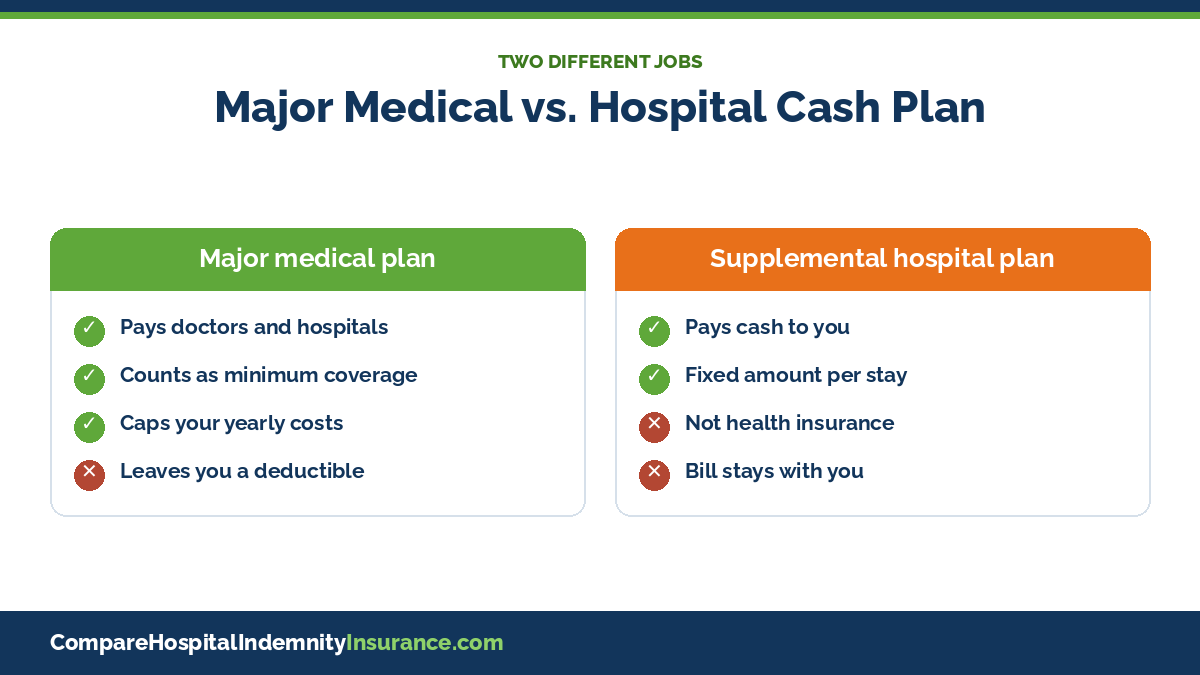
Federal tax law lists insurance that pays a fixed amount per day of hospitalization as permitted coverage, so a true hospital indemnity policy generally does not cost you HSA eligibility. That is why some carriers label their plans HSA-compatible. Plans that pay for doctor visits or other first-dollar care can be treated differently, so check the plan before you enroll.
Hospital Indemnity Quotes
Call a Licensed Agent Now
Compare supplemental hospital plans from several carriers in your state.
☎ 1-888-891-0229
No obligation to enroll
Who It Helps and Who Can Skip It
Supplemental hospital insurance is a budgeting tool, not a medical safety net. It makes the most sense when a hospital stay would strain your cash, and the least sense when you could pay your full out-of-pocket max without much pain.
Often a good fit
✔
Workers on high-deductible or HSA-qualified plans with thin savings
✔
Marketplace enrollees whose plan has a high out-of-pocket limit
✔
Self-employed people who lose income during any stay
✔
Families planning a pregnancy, if they buy well before the waiting period would matter
✔
People who want cash for travel, childcare or bills during a hospital stay
Often not worth it
✕
Anyone with no major medical coverage, since this cannot replace it
✕
People whose health plan has a low deductible and low out-of-pocket max
✕
Buyers who could cover their full out-of-pocket max from savings
✕
Those with a condition that falls inside a long pre-existing limit
✕
People already pregnant when they apply, since most plans exclude that birth
Pregnancy is the most common reason families shop for these plans, and the timing rules are strict. Our page on hospital indemnity insurance for pregnancy walks through when to enroll.
Where to Buy It and What Happens After a Stay
There are three main doors. Each one changes the price, the health questions and how long you can keep the policy.
Through your job
Many employers offer a voluntary hospital plan at open enrollment, paid by payroll deduction. Group plans often skip health questions for workers who are actively at work, but you can usually join only at open enrollment, when you are hired or after a life event. Ask whether the coverage is portable if you leave.
From a licensed agent or broker
An agent can show individual plans from several carriers at once and explain how their waiting periods differ. Individual policies are priced mostly by your age and state, and many can be bought any time of year. A list of hospital indemnity insurance companies shows which carriers sell individual plans.
Directly from a carrier
Before you sign any application, confirm
- ✔
The state outline of coverage, not just the marketing brochure
- ✔
How the policy defines an admission and whether observation stays count
- ✔
Every waiting period and the length of the pre-existing condition limit
- ✔
Whether the policy is guaranteed renewable and when coverage ends
- ✔
Whether premiums are paid before or after tax if bought through work
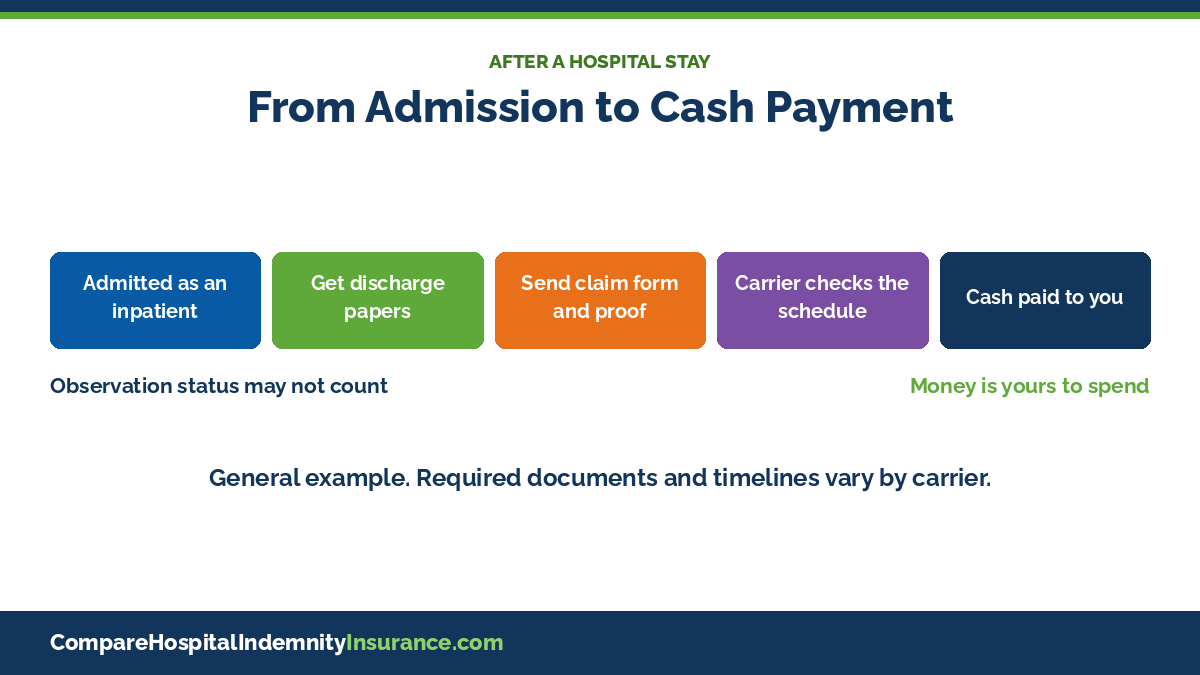
After a covered stay, the claim process is simple compared with health insurance. You send the claim form with proof of the admission, such as a discharge summary or itemized bill, and the carrier pays the scheduled amount to you. ACA Marketplace enrollees should note that HealthCare.gov sells major medical plans; a hospital indemnity policy is bought separately from a carrier, an agent or an employer.