Finding Out Mid-Year: What Reopens Enrollment and What Does Not
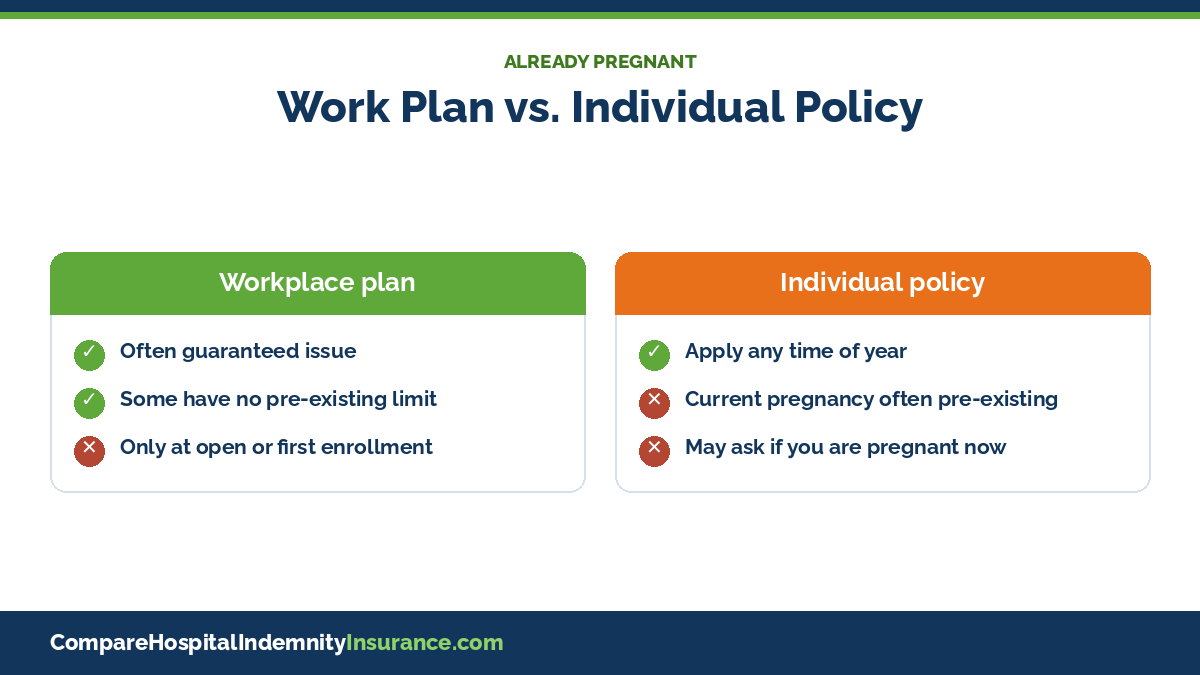
Most payroll-deducted hospital indemnity plans run through a Section 125 cafeteria plan. That ties mid-year changes to the IRS list of change-in-status events, and that list has a gap that catches expecting parents off guard.
Gap fact
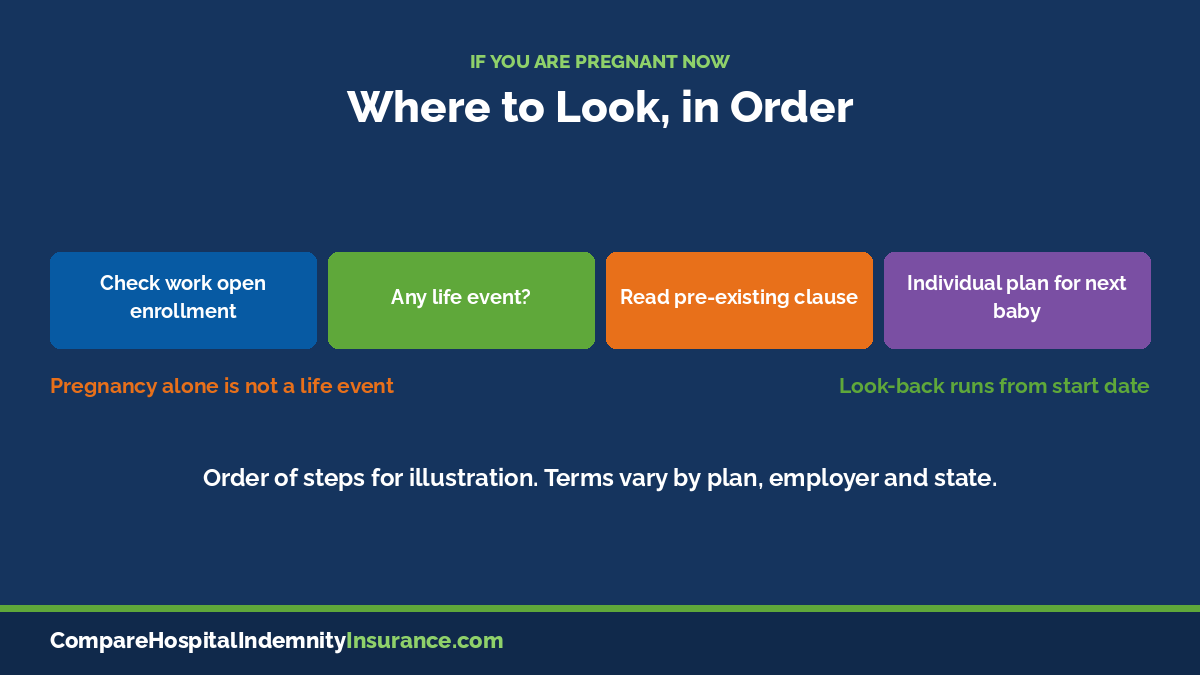
The IRS regulation that sets cafeteria-plan election changes (26 CFR 1.125-4) lists birth, adoption and placement for adoption as events that change your number of dependents. Pregnancy is not on the list, so a positive test alone usually does not let you add hospital indemnity mid-year.
Events that can open a window during a pregnancy
- ✔
Starting a new job that offers hospital indemnity, during its first enrollment window
- ✔
Marriage, which can let you join your new spouse’s plan
- ✔
A change in employment status for you or your spouse that affects eligibility
- ✔
A move that changes which plans you can get
- ✔
Your employer’s annual open enrollment, if it falls before your due date
Birth itself is a qualifying event, but coverage added after delivery comes too late for the delivery stay. Newborn rules are covered in does hospital indemnity cover childbirth.
Hospital Indemnity Quotes
Call a Licensed Agent Now
A licensed agent can compare pre-existing and childbirth terms on plans available to you now.
☎ 1-888-891-0229
No obligation to enroll
Due-Date Math: Run Your Dates Before You Enroll
Two clocks matter, and both start on the certificate effective date, not the day you clicked enroll. Run each one against your due date, then subtract a few weeks in case the baby comes early.
Example dates only
Jan 1
example effective date after November open enrollment
Oct 1
earliest payable birth on a nine-month birth exclusion
Jan 1 next year
end of an example 12-month pre-existing limitation
June
example due date for a pregnancy that began in September
With those example dates, a parent who conceived in September and enrolls for a January start is pregnant on the effective date. A plan with no pre-existing limit and no birth exclusion could pay for the June delivery. A 12/12 plan would not, and a nine-month birth exclusion alone would also block it, since June comes before October.
Complications follow the same clock
On many forms, a complication of a pregnancy that was already pre-existing is treated as part of that same condition. Do not assume preeclampsia or a pre-term admission escapes the limitation just because the policy covers complications in general.
Pages to Find in the Certificate
1
Find the definitions page. Read how it defines pre-existing condition, sickness and complications of pregnancy, and note the look-back length.
2
Find the limitations section. Look for a pre-existing limitation, its length, and any wording that names pregnancy or the effective date.
3
Look for a childbirth clause. Search for giving birth, maternity and normal pregnancy to catch a separate birth exclusion or waiting period.
4
Check the newborn wording. See whether a healthy baby’s first stay is paid and how many days you have to add the child.
5
Note the effective date. Use the date on the certificate or schedule page for all of the math above.
If your workplace plan is through MetLife, see our MetLife hospital indemnity pregnancy page for that carrier’s terms.