Does Voluntary Hospital Indemnity Cover Childbirth at Work?
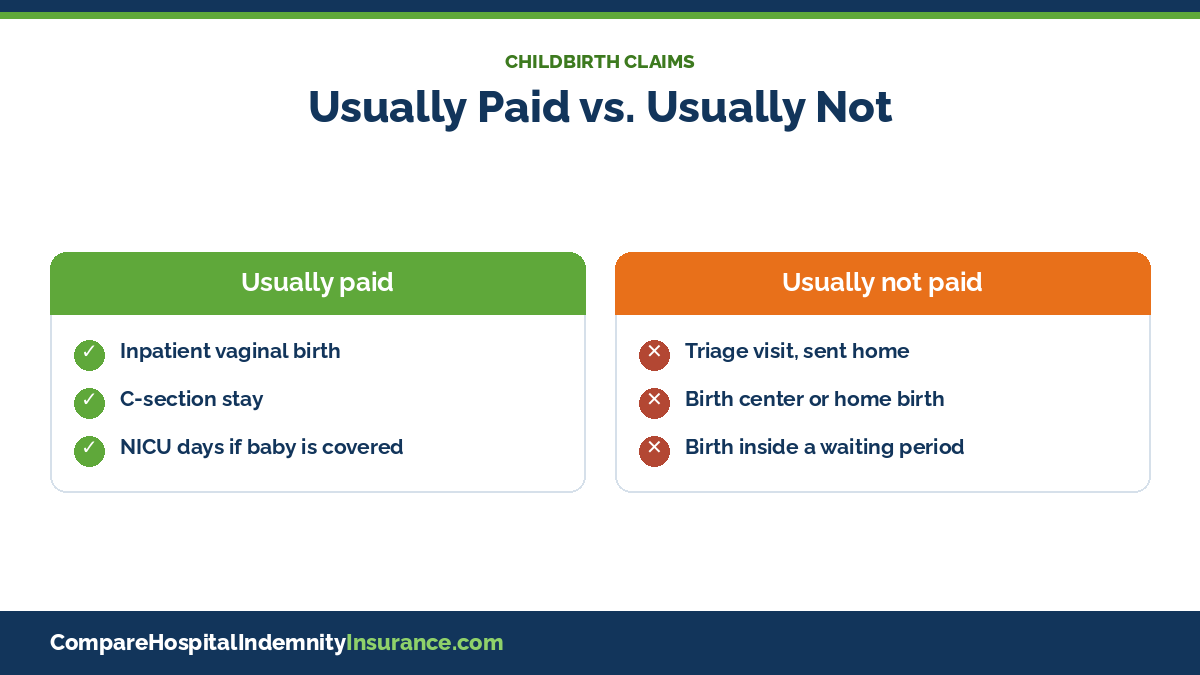
Most people asking this have a voluntary plan offered through their job. Group plans are often the easiest route to a paid birth, because enrollment is usually guaranteed and several summaries we read state no pregnancy waiting period.
Unum (employee summary, form 9-24)
Pays childbirth for any insured after the coverage effective date and states the plan has no pre-existing condition limitation.
Cigna (National Jewish Health, 2025)
Covered illness includes pregnancy, and the summary states no benefit waiting period unless otherwise stated.
Guardian (carrier website)
Guardian says its plan benefits are not payable for a birth in the first 9 months of coverage.
Timing at open enrollment:
Group coverage usually starts on the plan year date, not the day you sign up. A plan with a 9-month birth rule that starts January 1 would not pay for a birth before October 1 of that year.
Our guide to voluntary hospital indemnity insurance explains payroll deduction, portability and what happens to the plan if you leave the job after the baby arrives.
Before you file
Most plans pay a birth claim from the hospital’s admission and discharge dates. An itemized bill or discharge summary that shows inpatient status and both dates is the usual proof, and a separate claim covers any NICU stay for the baby.
Russell Noga, Licensed Insurance Agent
Five Employer Plans, One Delivery: Our Payout Math
Plan summaries list benefit amounts but rarely show what a birth would pay. We took each plan’s own admission and daily amounts and applied them to two typical stays: two days for a vaginal birth and four days for a C-section. The newborn column is a separate payment some plans make for a healthy baby’s nursery stay.
| Plan reviewed |
Admission + daily benefit |
Childbirth covered? |
Example: 2-day vaginal |
Example: 4-day C-section |
Healthy newborn stay |
| Unum group, employee summary (form 9-24) |
$1,500 + $100/day |
Yes, after effective date; no pre-existing limit |
$1,700 |
$1,900 |
Excluded unless baby is sick or injured |
| Cigna group, National Jewish Health (2025), Tier 1 |
$1,250 + $125/day |
Yes, pregnancy is a covered illness |
$1,500 |
$1,750 |
$625 once per newborn |
| Sun Life group, University of the South (rates eff. July 1, 2026) |
$1,000 first day + $100/day |
Yes, routine pregnancy listed |
$1,200 |
$1,400 |
$100/day, up to 3 days |
| Aetna group, Hearne ISD (High plan) |
$1,500 + $200/day from day two |
Yes, stays to deliver a baby |
$1,700 |
$2,100 |
$200 lump sum per birth |
| Aflac group, ICUBA (High plan, brochure exp. 12/25) |
$1,000 + $100/day |
Yes, pregnancy is in the sickness definition |
$1,200 |
$1,400 |
Not paid unless baby needs ICU |
Our calculation from each employer’s published plan summary, checked November 2026. Payouts are examples only: admission + daily benefit x days, counting every day of the stay except on the Aetna plan, which states daily benefits begin on day two. The Aflac brochure’s own two-day example also totals $1,200. Certificates control, and your employer’s amounts may differ.
What the math shows
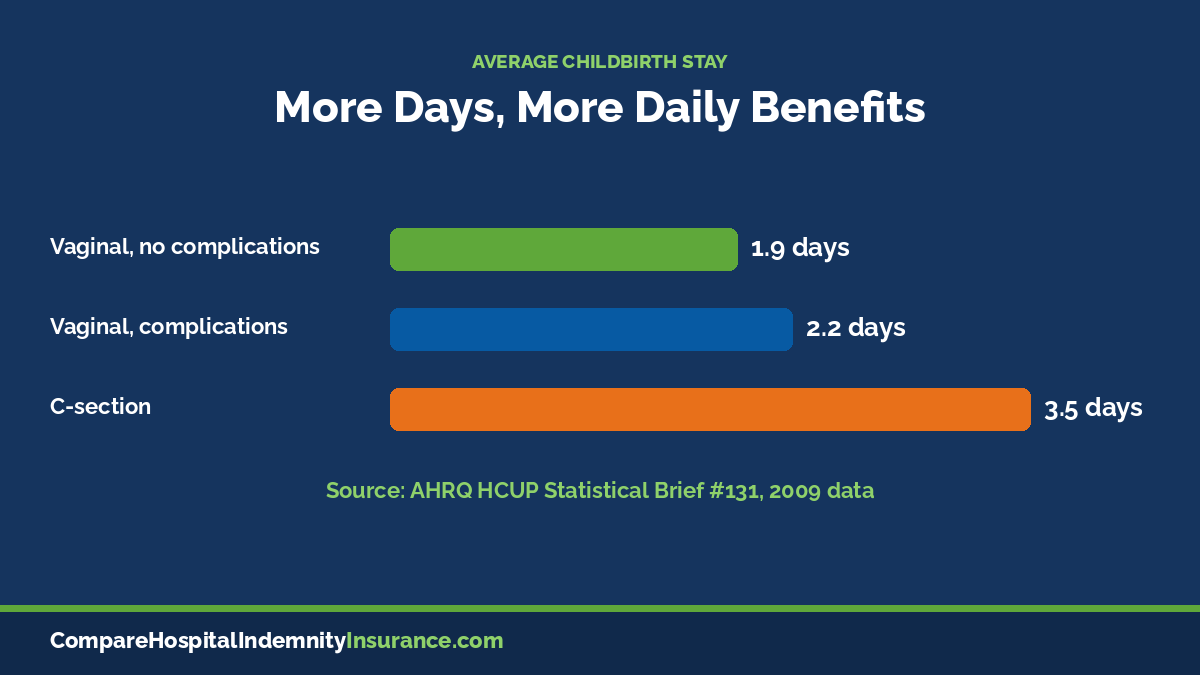
On these plans the admission benefit does most of the work. Two extra days in the hospital after a C-section added only $200 to $400, while the one-time admission payment ran from $1,000 to $1,500.
Watch the per-year limits. The Unum plan pays its admission benefit once per year, and the Cigna plan once every 60 days. A pregnancy complication stay a few weeks before delivery could use up that admission benefit, leaving only daily pay for the birth itself. For how other stays compare, see how much hospital indemnity pays.
Do Hospital Indemnity Plans Cover a C-Section Differently?
None of the five plans pays a separate C-section rate. A cesarean pays more only because the stay runs longer, so more daily benefits add up. Plans that include a surgery benefit or a rider may add money for the operation itself.
Births in the United States, 2024 final data (CDC)
3,628,934
births registered in 2024
32.4%
of births were by cesarean
26.6%
low-risk cesarean rate, unchanged from 2023
Do not count on complication pay:
The Aflac Choice individual outline of coverage, form B40125IA, states that elective cesarean deliveries are not considered complications of pregnancy, so a planned C-section is paid, or excluded, under the normal birth rules.