Employers can also offer a separate workplace version issued by United of Omaha Life Insurance Company, a subsidiary. To weigh other insurers, see our ranking of hospital indemnity insurance companies, or compare hospital indemnity insurance quotes side by side.
This is a supplemental, limited-benefit policy. It is not health insurance or minimum essential coverage under the Affordable Care Act.
Quick answer
Mutual of Omaha hospital indemnity coverage is a fixed-cash policy that pays a set dollar amount for each covered hospital stay. The individual HIP plan pays $100 to $1,000 a day for 3 to 31 days, or one lump sum of up to $3,000, and ages 64 to 74 can get it without health questions in most states.
Mutual HIP: The Plan Behind the Search
Many people reach this page by searching for a mutual HIP site. HIP is the short name Mutual of Omaha’s claim instructions and agent flyers use for its individual hospital indemnity policy. Current policy numbers start with HI25, the policy form, while older hospital indemnity forms start with HI10 or C4. We found no site called mutualhip.com in any Mutual of Omaha brochure, claim form or web page we reviewed in November 2026; the company’s own service tools sit on mutualofomaha.com.
Individual policyholders
Customer Access, the online account on Mutual of Omaha’s main site, is where individual policy owners manage coverage.
HI25 claims
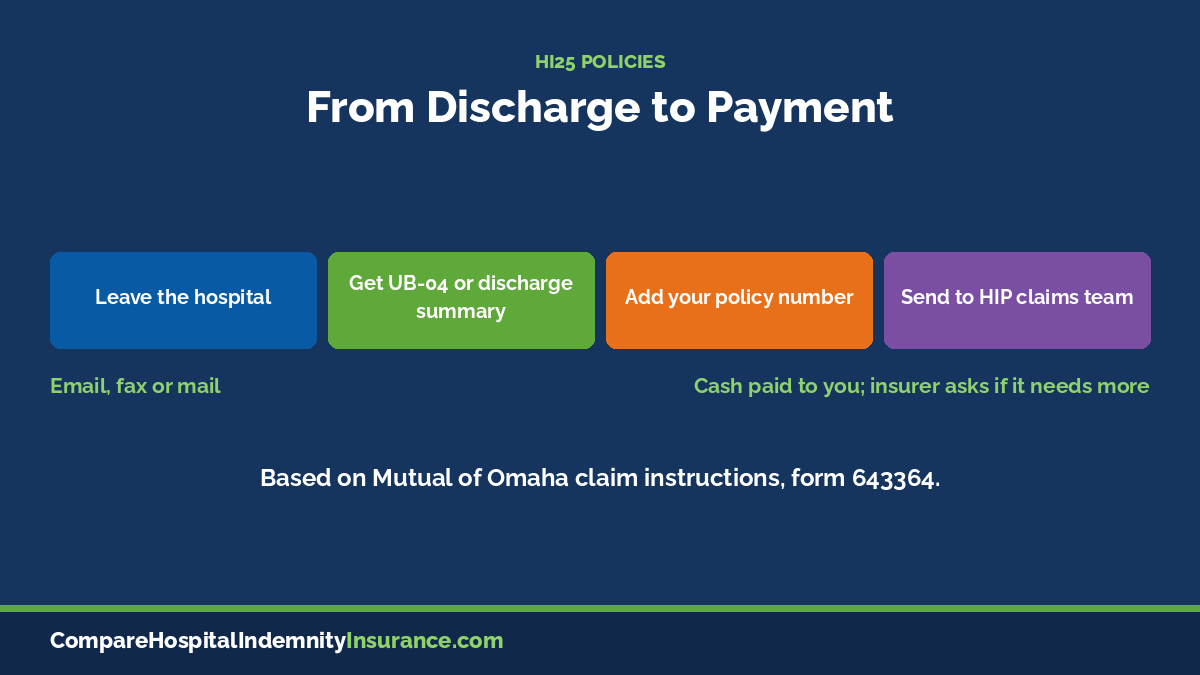
Hospital Protection plan claims go to a dedicated HIP claims team by email, fax or mail, per claim instruction form 643364.
Workplace members
Employees covered through work check claim status and payments on Mutual of Omaha’s group benefits claims site.
Before you log in:
Enter a policy number, date of birth or hospital records only on a page you reached from mutualofomaha.com or from the contact details printed on your policy.
What a Stay Pays: Example Math for 3, 5 and 10 Days
Mutual of Omaha does not publish payouts by stay length, so we ran the numbers from the booklet’s rules. A daily benefit pays for each inpatient day up to your day option. A lump sum pays once per period of confinement, however long the stay.
| Example benefit choice |
3-day stay |
5-day stay |
10-day stay |
| $200 a day, 10-day option |
$600 |
$1,000 |
$2,000 |
| $300 a day, 5-day option |
$900 |
$1,500 |
$1,500 (capped at 5 days) |
| $300 a day, 10-day option |
$900 |
$1,500 |
$3,000 |
| $500 a day, 10-day option |
$1,500 |
$2,500 |
$5,000 |
| $1,500 lump sum |
$1,500 |
$1,500 |
$1,500 |
| $3,000 lump sum (the maximum) |
$3,000 |
$3,000 |
$3,000 |
Examples only, calculated by CompareHospitalIndemnityInsurance.com from the Hospital Protection plan producer booklet (form HI25): daily benefit $100 to $1,000, day options 3-10, 15, 20 or 31, lump sum $100 to $3,000. Assumes one covered inpatient stay of 24 hours or more. Premiums differ for each choice.
The break-even point between the two styles is simple division. A $1,500 lump sum equals a $300 daily benefit at five days and a $500 daily benefit at three days. Stays shorter than that favor the lump sum. Longer ones favor the daily benefit, as long as the day option is long enough to keep paying. Our guide to how much hospital indemnity pays runs the same test on other carriers.
Deductible check
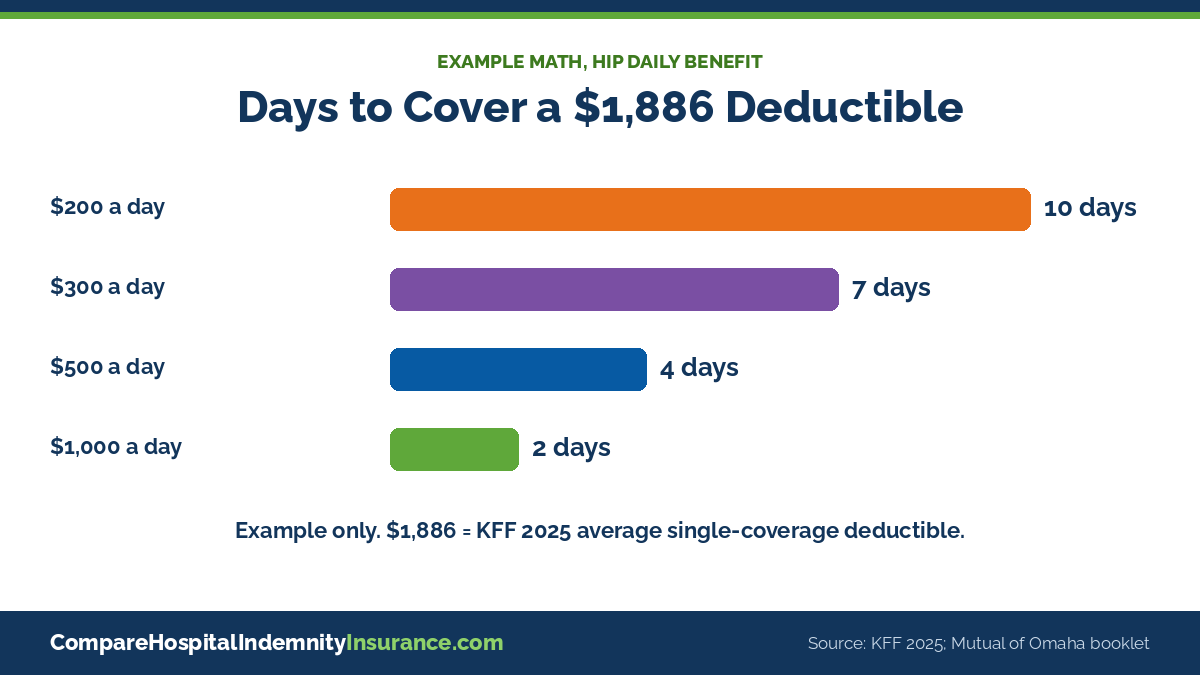
KFF’s 2025 Employer Health Benefits Survey puts the average single-coverage deductible at $1,886, and the 2026 Medicare Part A hospital deductible is $1,736. A $2,000 lump sum would cover either one from a single admission.
Before you pick a payout style
The daily-or-lump-sum choice is made once on the application and applies to every future covered stay. A lump sum pays the same amount for a one-night admission or a two-week one, so it lines up with a fixed deductible, while a daily benefit only beats it when the day option is long enough to keep paying.
Russell Noga, Licensed Insurance Agent