Riders Can Cost More Than the Base Plan
The LifeSecure rate sheet prices each optional rider separately, which makes it easy to see how add-ons move the monthly total. These are the self-only rates for ages 40-49 in Texas.
Rider prices per month, ages 40-49 (LifeSecure Texas)
$6.96
outpatient surgery rider, $500 level
$2.03
emergency room and ambulance rider
$6.85
lump sum admission rider, $500 level
$15.84
all three together
Add all three to the $9.91 base plan and the total reaches $25.75 a month, about 2.6 times the base price. The lump sum rider is the one that changes the break-even math most, because the base LifeSecure plan pays only per day. With a $500 lump sum, a 3-day stay at $200 a day would pay $1,100 instead of $600, for $6.85 more a month.
Per-paycheck math
Benefit guides often list hospital indemnity rates per paycheck, which makes them look half as expensive as a monthly quote. The University of Richmond lists $8.73 per pay over 26 pays and $18.91 a month for the same coverage, and both come to about $227 a year. Convert every quote to a yearly figure before comparing.
Russell Noga, Licensed Insurance Agent
A Year of Premium Next to a Real Hospital Bill
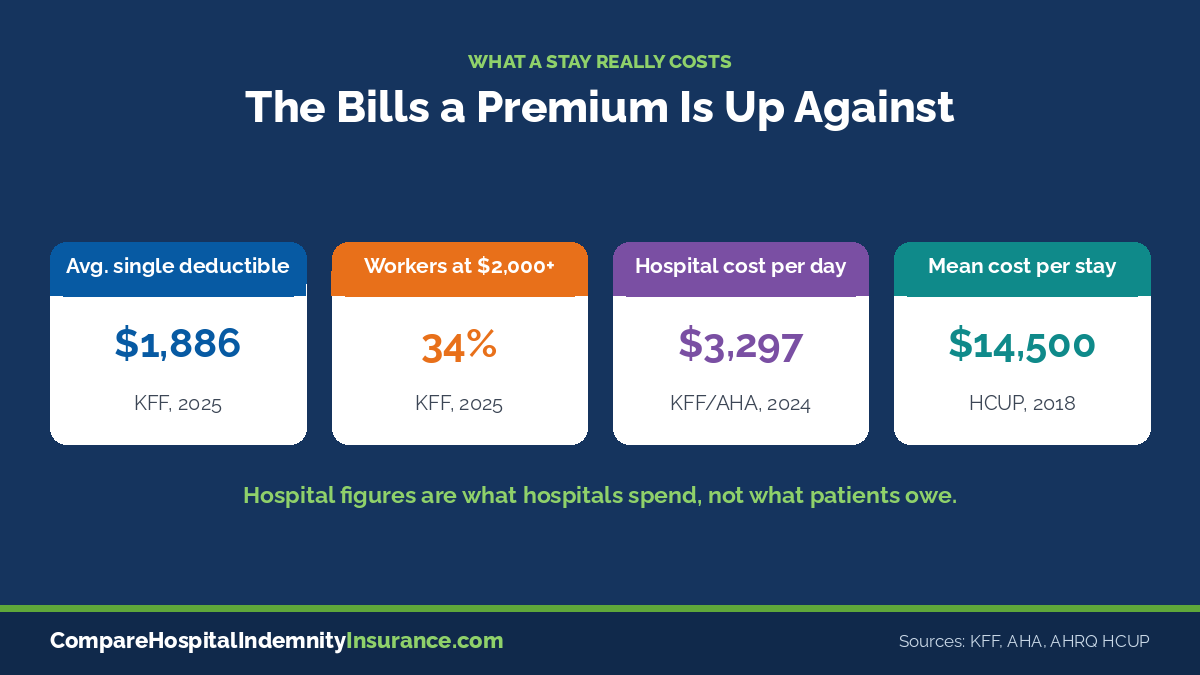
Premiums only make sense next to the bills they are meant to soften. KFF’s 2025 Employer Health Benefits Survey puts the average deductible at $1,886 for workers with single coverage and a general deductible, and 34% of covered workers face a deductible of $2,000 or more. Hospitals themselves spent an average of $3,297 per adjusted inpatient day in 2024, according to KFF’s analysis of American Hospital Association data, and federal HCUP data put the mean cost of a nonmaternal hospital stay at $14,500 in 2018.
Your share of those costs is set by your health plan, so the deductible is the better yardstick. Our math against the $1,886 average:
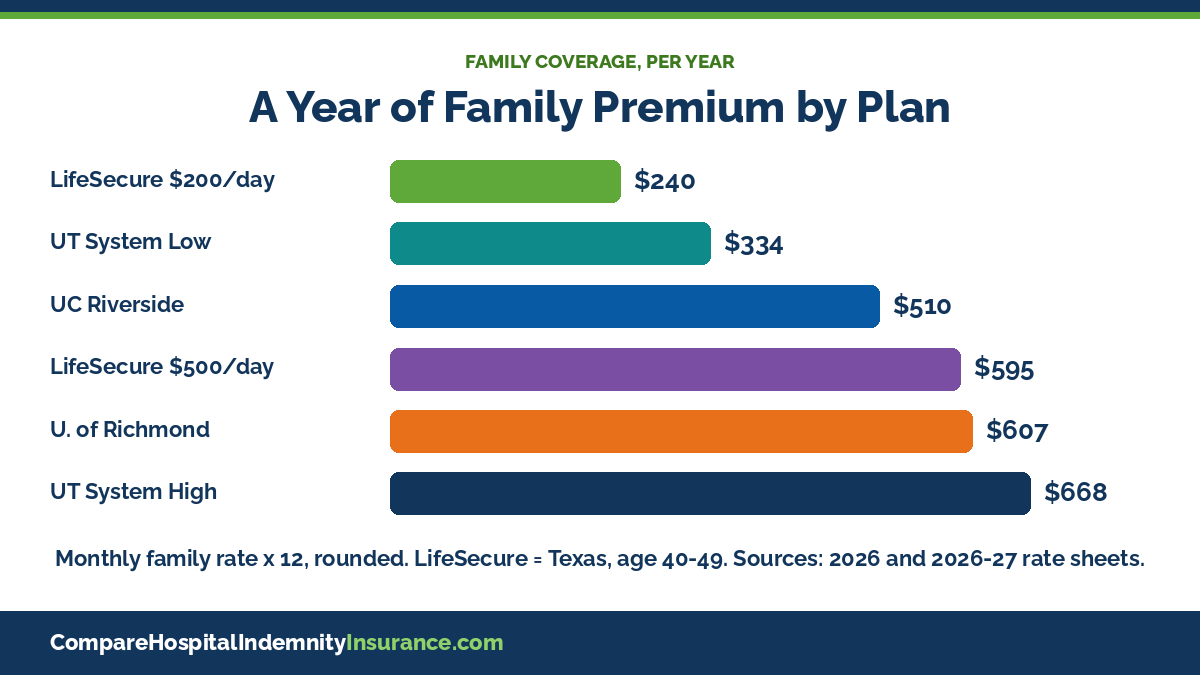
- UC Riverside Medium: a year of employee premium is about 10% of the average deductible, and a 3-day stay would pay about 95% of it.
- UT System High: a year of premium is about 12% of the deductible; a 3-day stay would cover about 85%.
- University of Richmond: about 12% to own it for a year; a 3-day stay would cover about 69%.
- UT System Low: about 6% to own it; a 3-day stay would cover about 42%.
- LifeSecure $200 a day, age 40-49: about 6% to own it; a 3-day stay would cover about 32%.
Read this as a range:
Your own deductible, out-of-pocket maximum and savings decide whether 32% or 95% of a deductible is enough. The cash can also go to travel, lost pay or childcare.
Hospital Indemnity Quotes
Call a Licensed Agent Now
Get monthly premiums matched to your age, state and household.
☎ 1-888-891-0229
No obligation to enroll
Pre-Tax or After-Tax: The Premium Choice That Changes Your Check
Workplace plans may take the premium out before or after taxes, and that choice affects the benefit, not just the paycheck. Under Revenue Ruling 69-154 and a 2017 IRS Chief Counsel memo, the rules for fixed indemnity benefits work roughly like this.
- ✔
Premium paid with after-tax money: the cash benefit is generally not taxable, even when it is larger than your medical bills.
- ✔
Premium paid pre-tax or by the employer: any part of the benefit above your unreimbursed medical costs is generally taxable income.
- ✔
Your benefits guide says which method applies. San Diego County, for example, states that its hospital indemnity deductions are taken after tax.
A pre-tax deduction saves only the tax on a premium in the $115 to $245 range, often well under $100 a year. A taxable benefit can cost more than that after a large claim, so the after-tax route often keeps more money in your hand. Tax situations differ, so confirm with a tax professional.