Voya High Plan vs Low Plan: What the Upgrade Buys
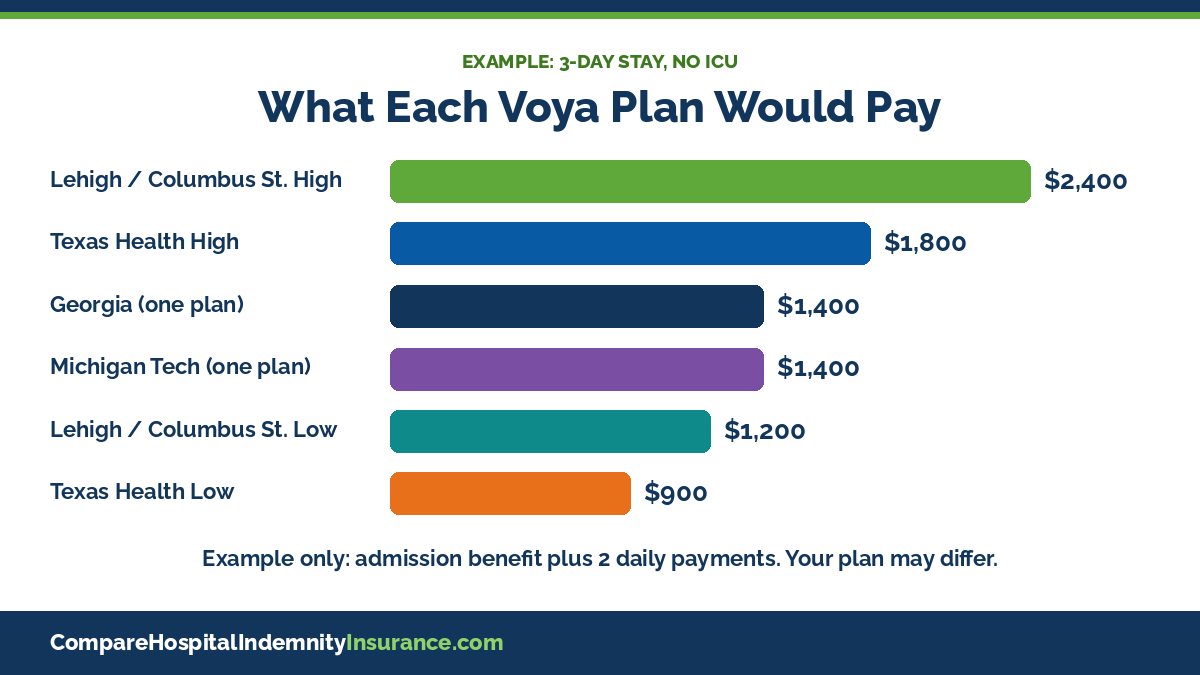
Many people search for the Voya high plan vs low plan because enrollment screens show both with little explanation. In every two-option Voya plan we reviewed, the high plan doubled the admission and daily amounts and cost almost exactly twice as much. Observation pay, wellness pay and newborn rules stayed the same.
Yearly employee-only premium, low vs high
$111 vs $219
Texas Health Resources (26 pay periods)
$127 vs $255
Cook County, Illinois, $100 vs $200 daily (26 pay periods)
$151 vs $300
Columbus State Community College (12 months)
At Texas Health Resources, the high plan cost about $108 more a year in employee-only premium, yet one three-day admission would pay $900 more. If you expect a planned surgery or a birth, the high plan usually earns back its extra cost in a single stay. If you rarely see a hospital, the low plan keeps more in your paycheck. Our guide to low vs high hospital indemnity plans runs the same choice for other carriers.
Extras Voya Plans Can Pay, Including Pregnancy
Observation stays
Most plans above pay a flat $100 to $250 once a year for 4 to just under 20 straight hours in observation.
Wellness benefit
Some employers add $50 to $60 a year per covered person for a screening such as a mammogram. Some states call it the Health Screening Benefit.
Childbirth
The Georgia certificate defines sickness to include pregnancy, so a delivery admission is paid like any other stay.
Newborn payment
Without child coverage in force before the birth, plans pay a one-time amount instead: $100 at Lehigh, $150 at Michigan Tech, $250 at Texas Health Resources.
Employers can also add rehabilitation days, ambulance pay, and urgent care or emergency room benefits. Those extras exist only if your employer bought them, so find them by name in your summary. Our page on how much hospital indemnity pays explains how stays are counted in days.
Watch for
Columbus State’s plan pays each admission benefit only twice per calendar year, while the other plans allow up to eight. A second and third stay in the same year can pay very differently from one plan to the next.
From the agent’s desk
Voya pays its flat observation benefit for stays of at least 4 straight hours, and several employer plans treat 20 or more hours in an observation unit as a full confinement instead. Ask the hospital for the exact arrival, admission and discharge times in writing before filing, because the hour count decides which Voya benefit applies.
Russell Noga, Licensed Insurance Agent
How to File a Voya Hospital Indemnity Claim
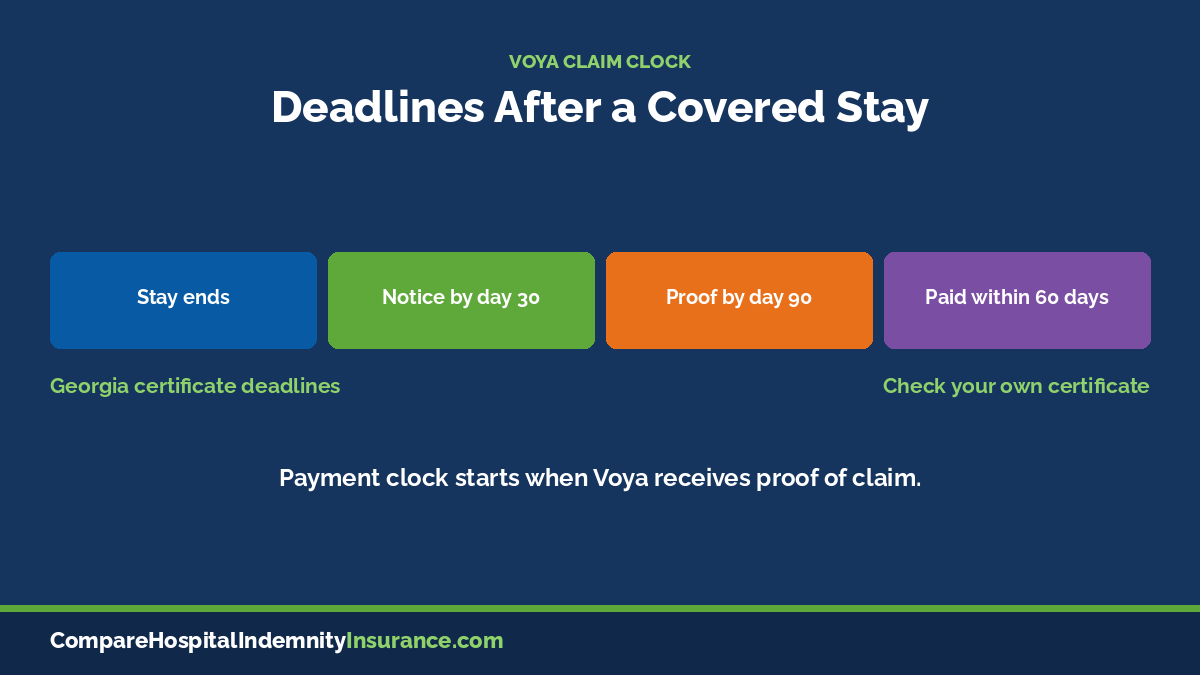
Voya claims start online. The steps below follow a 2025 Voya claim flyer for one university group, and the deadlines come from the State of Georgia certificate. Your own certificate controls if it differs.
1
Open your employer’s Voya page. Each group has its own Employee Benefits Resource Center page on Voya’s site. Choose Start A Claim there.
2
Answer the questionnaire. It builds a claim package for your situation. A wellness benefit claim can be sent right at the end of the questionnaire, with no forms.
3
Collect hospital paperwork. Get records that show your admission and discharge dates and whether any part of the stay was in intensive care or observation.
4
Upload or mail the package. Use Submit Your Forms in Voya’s online Claims Center, or follow the mail and fax directions printed on the package.
5
Track it by claim number. The Claims Center shows status. The flyer says approved claims are paid within 10 business days of approval.
Voya says it runs proactive claim checks across hospital indemnity, accident and critical illness coverage, so list every Voya policy you hold through work. Voya reported an average hospital indemnity claim payment of $1,649 for claims paid in 2024.