What Families With Job-Based Coverage Actually Pay for a Birth
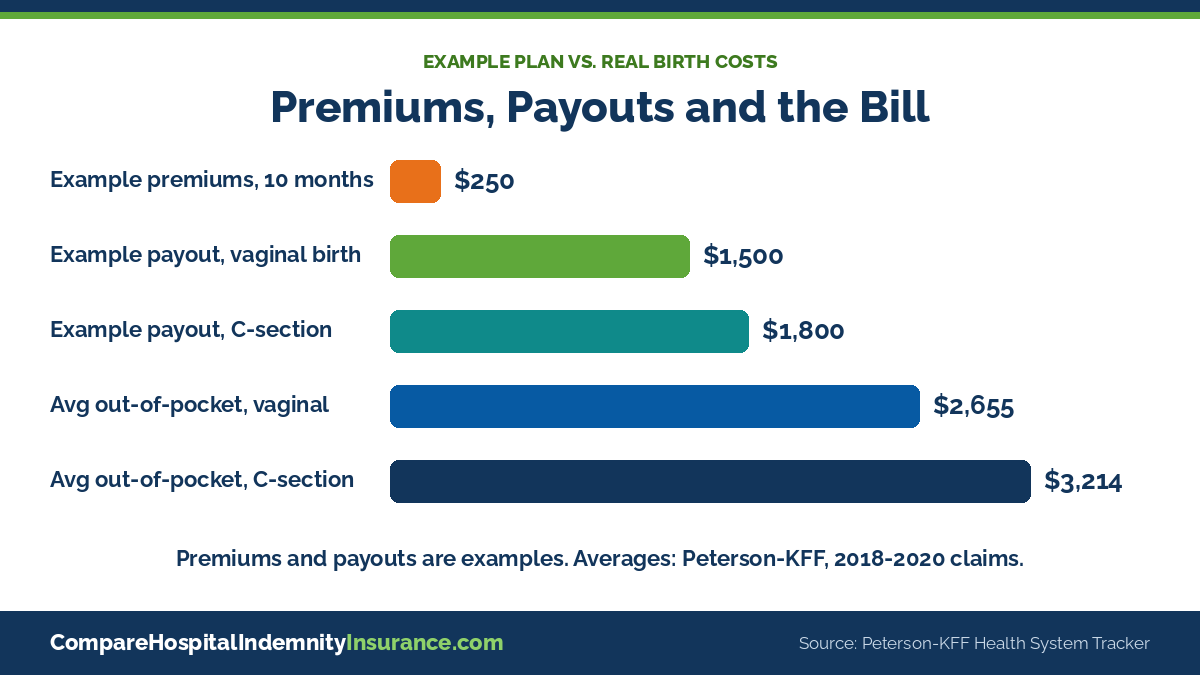
A payout only matters next to the bill it is meant to soften. The Peterson-KFF Health System Tracker studied claims from 2018 through 2020 for women ages 15 to 49 in large employer health plans and compared those who gave birth with similar women who did not.
Peterson-KFF analysis, published July 2022
$18,865
extra total health spending linked to pregnancy, birth and postpartum care
$2,854
of that paid out of pocket, on average
$2,655
average extra out-of-pocket for a vaginal birth
$3,214
average extra out-of-pocket for a C-section
Those averages exclude the baby’s own medical costs, so a newborn who needs extra care can push the family total higher. Stay length shapes the payout side: federal Healthcare Cost and Utilization Project figures for 2009 show an average C-section stay of about 3.5 days against roughly 2 days for an uncomplicated vaginal birth. In the example plan, those extra days are why a C-section payout lands closer to the higher out-of-pocket figure.
Where the Purchase Tends to Pay Off
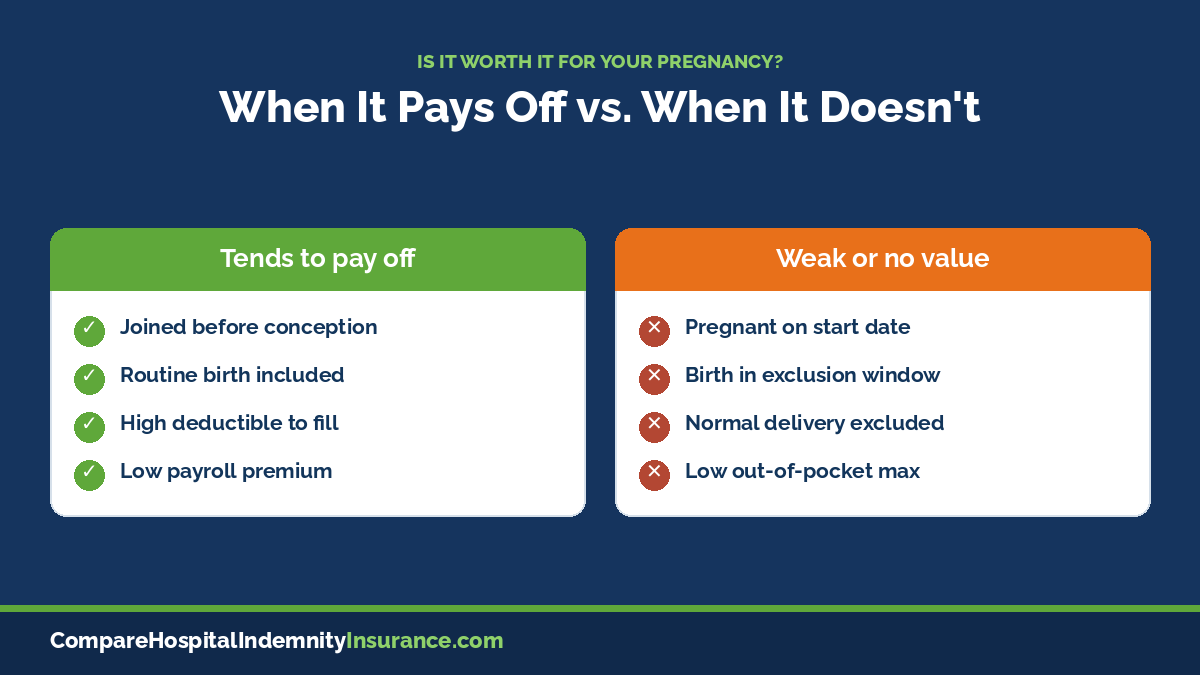
A high deductible
If your medical plan has a deductible in the thousands, a birth will likely use most of it, and the indemnity check fills part of that hole.
A cheap payroll plan
Group premiums are often low, and some employer plans list no birth waiting period, so only a few months of premiums come before the claim.
A planned or likely C-section
Longer stays mean more daily benefits. Daily amounts add up fastest when recovery takes several days.
Unpaid or partly paid leave
The cash comes to you, so it can cover rent or groceries while a paycheck is reduced, not only medical bills.
Premiums also feel lighter when a family already budgets for the baby. To see what coverage typically runs, read our breakdown of hospital indemnity insurance cost.
When the Policy Is Likely to Pay Nothing for This Baby
- The pregnancy began before the effective date. Many contracts define pregnancy as a sickness, so a pregnancy that already existed falls under the pre-existing condition limitation.
- The birth lands inside a birth exclusion window. Some individual policies refuse any delivery in the first 9 or 10 months of coverage.
- Normal childbirth is excluded. A few individual plans pay only for complications of pregnancy, never for a routine delivery.
- Your health plan already caps your costs low. If your out-of-pocket maximum is small, the cash adds less value than the premiums suggest.
Not covered by ACA rules
Healthcare.gov states that Marketplace health plans cannot turn you down or charge more because you are pregnant, and that pregnancy and childbirth are covered from the first day of the plan. Hospital indemnity policies are not bound by those rules. In a case reported by Scripps News in January 2025, a family who joined a MetLife employer plan after the pregnancy began had the birth claim denied as pre-existing, because the policy defined pregnancy as a sickness.
Before open enrollment
Many employer certificates define pregnancy as a sickness, which brings it under the pre-existing condition limitation if conception came before the coverage start date. Ask HR for the certificate, not just the benefit flyer, and read the definitions section before choosing this coverage for a pregnancy.
Russell Noga, Licensed Insurance Agent
Four Insurers’ Pregnancy Terms, Side by Side
For a pregnancy, the fine print matters more than the benefit amounts. We read four carriers’ published employer-plan documents and pulled the terms that decide whether a birth is paid. Employers choose their own options, so your plan may differ.
| Carrier and document |
Routine birth paid? |
Pregnancy timing terms |
Newborn note |
What it means for value |
| Unum group hospital indemnity (employer plan summary) |
Yes, same as any covered sickness |
Summary states no pre-existing condition limitation; childbirth payable after the coverage effective date |
Newborn stays right after birth excluded unless the baby is sick or injured |
Strongest case for enrolling at open enrollment |
| MetLife group hospital indemnity (employer quote sheet) |
Yes, vaginal and non-emergency C-section |
No childbirth elimination period on that quote, but the disclaimer warns a pre-existing limitation may apply |
Small nursery benefit for a healthy newborn, limited days |
Confirm the certificate before counting on a payout |
| Cigna group hospital indemnity (employer benefit summary) |
Not described in the summary |
Lists no maternity waiting period and no pre-existing limit |
Not addressed; see the certificate |
Ask HR for the maternity wording |
| Guardian group hospital indemnity (product page) |
Plans differ by employer |
No benefit for a birth in the first 9 months of coverage; enrolling while pregnant may not pay |
May pay for a baby’s NICU stay |
Works best when joined well before conception |
Sources: Unum, MetLife and Cigna employer plan documents and Guardian’s pregnancy product page, reviewed November 2026. Terms vary by employer, state and policy form; the certificate of coverage controls.
Two plans with identical admission benefits can be worth very different amounts to an expecting parent. For more on each insurer’s broader lineup, see our review of hospital indemnity insurance companies.
Timing the Decision Around Open Enrollment
Employer plans usually let you join only during the yearly enrollment window or after a qualifying event. If you hope to conceive in the coming year, the window before that year is the one that counts.
1
Find your health plan’s deductible and out-of-pocket maximum. That gap is the most the indemnity cash can realistically offset.
2
Read the pregnancy terms before you pick a benefit level. Look for the words pre-existing, sickness and childbirth in the certificate or summary.
3
Multiply the monthly premium by the months until a likely due date. Add the months of any birth waiting period to see your real cost.
4
Compare that total with the example payout for a 2-day and a 4-day stay. If the payout is not clearly larger, the plan is a weak buy for this pregnancy.
5
Decide between pre-tax and after-tax payroll deductions. The choice can change whether the benefit is taxed.
Tax wrinkle
In Chief Counsel Memorandum 202323006, the IRS concluded that fixed indemnity payments can be taxable income when premiums were paid with pre-tax dollars and the payment exceeds your unreimbursed medical expenses. Benefits from a policy paid with after-tax dollars are generally not taxed. Confirm how your employer handles it, or ask a tax professional.