Most people searching for this plan already have it, or see it on an enrollment screen, and want to know two things: what it pays and how to get paid. This guide covers both, using published certificates and summaries from real employers. To see how Prudential fits among other carriers, including ones that sell plans directly to individuals, visit our guide to hospital indemnity insurance companies.
Prudential’s own documents call this an excepted benefits policy. It is not health insurance or major medical coverage, it is not minimum essential coverage under the Affordable Care Act, and it works alongside a medical plan instead of replacing one. If your job does not offer it, you can compare hospital indemnity insurance from carriers that sell to individuals.
Bottom line first
Prudential hospital indemnity is employer-sponsored, guaranteed-issue coverage that pays a lump sum for a hospital or ICU admission and a daily amount for each later day, at levels your employer picks. You file claims at Prudential MyBenefits or in the app, and payment does not depend on what your health plan paid.
Who Insures It and How Employees Get Access
Every Prudential hospital summary reviewed for this page names the same insurer: The Prudential Insurance Company of America, based in Newark, New Jersey, a Prudential Financial company. The product is sold by Prudential Group Insurance to employers, universities and other groups, which then offer it to their workers.
Workplace only
No Prudential hospital indemnity policy for direct individual purchase turned up in our research. Access comes through a group that holds a Prudential contract.
No health questions
Employer materials describe coverage as guaranteed issue, so acceptance does not depend on your health status.
Employer sets the menu
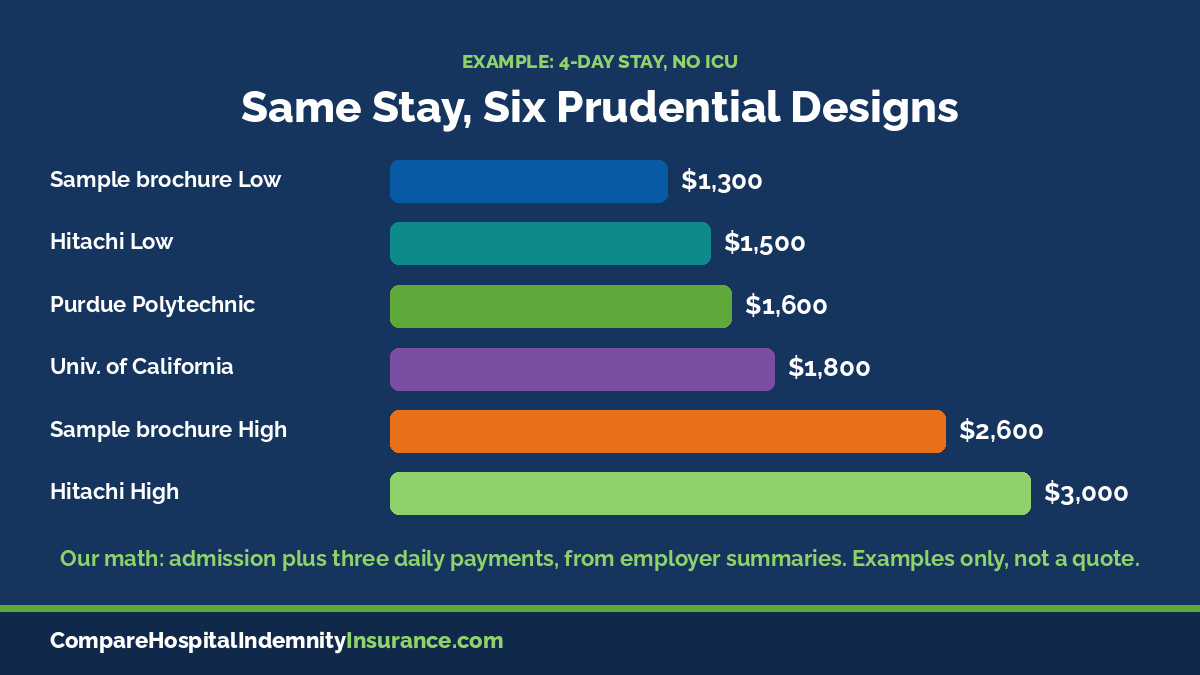
The group chooses benefit amounts, yearly limits and extras such as wellness or observation benefits, and some groups offer a Low and a High option.
Cash to you
Benefits are paid to the insured person, who can spend them on a deductible, groceries, travel or anything else.
Two identifiers help you match paperwork to your plan. Summaries list a contract series, such as 83500, and the MyBenefits registration page asks for a control number that is unique to your employer. That number appears in your enrollment materials, not on Prudential’s public site.
Filing a Prudential Hospital Indemnity Claim Step by Step
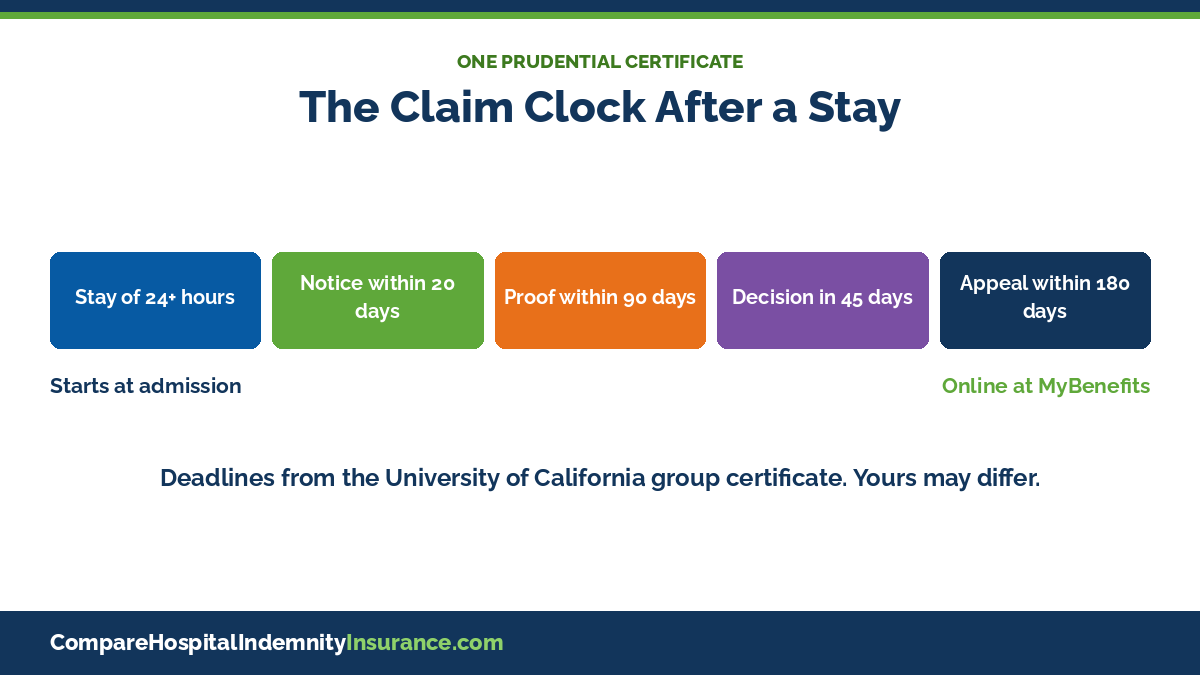
Prudential’s employee claim instructions describe the same online path for hospital indemnity, accident and critical illness claims. Keep your hospital paperwork handy before you start.
1
Register once. Go to prudential.com/mybenefits and choose to register. First-time users enter the employer’s control number and create a username and password.
2
Open the claims menu. Select My Claims, then File a Supplemental Health Claim. The same option is in the Prudential mobile app.
3
Describe the event. Enter what happened, the dates of admission and discharge, and the hospital or doctor who treated you.
4
Authorize records. Give Prudential permission to request information from your doctor so you do not have to collect every record yourself.
5
Choose payment and submit. Add payment details, upload any bills or discharge papers you have, then review and send. Status updates appear in the same account.
Paper option:
A printable claim form sits in the Forms Library on the MyBenefits site. Employer instructions say to sign it and attach supporting documents such as reports, invoices and medical records, then mail or fax it to the address on the form.